
| What it is | Shiitake (Lentinula edodes) is a culinary and functional mushroom traditionally associated with immune and everyday wellness support. |
| The key compound | Lentinan, a well-studied beta-glucan, sits at the heart of shiitake’s reputation — alongside eritadenine, ergothioneine and useful minerals. |
| Its role in a blend | A foundational, supporting mushroom rather than a headline focus ingredient — it rounds out a cognitive-wellness formula. |
| On the label | Look for a named species, a fruiting-body extract, a proper hot-water extraction and, ideally, a stated beta-glucan percentage. |
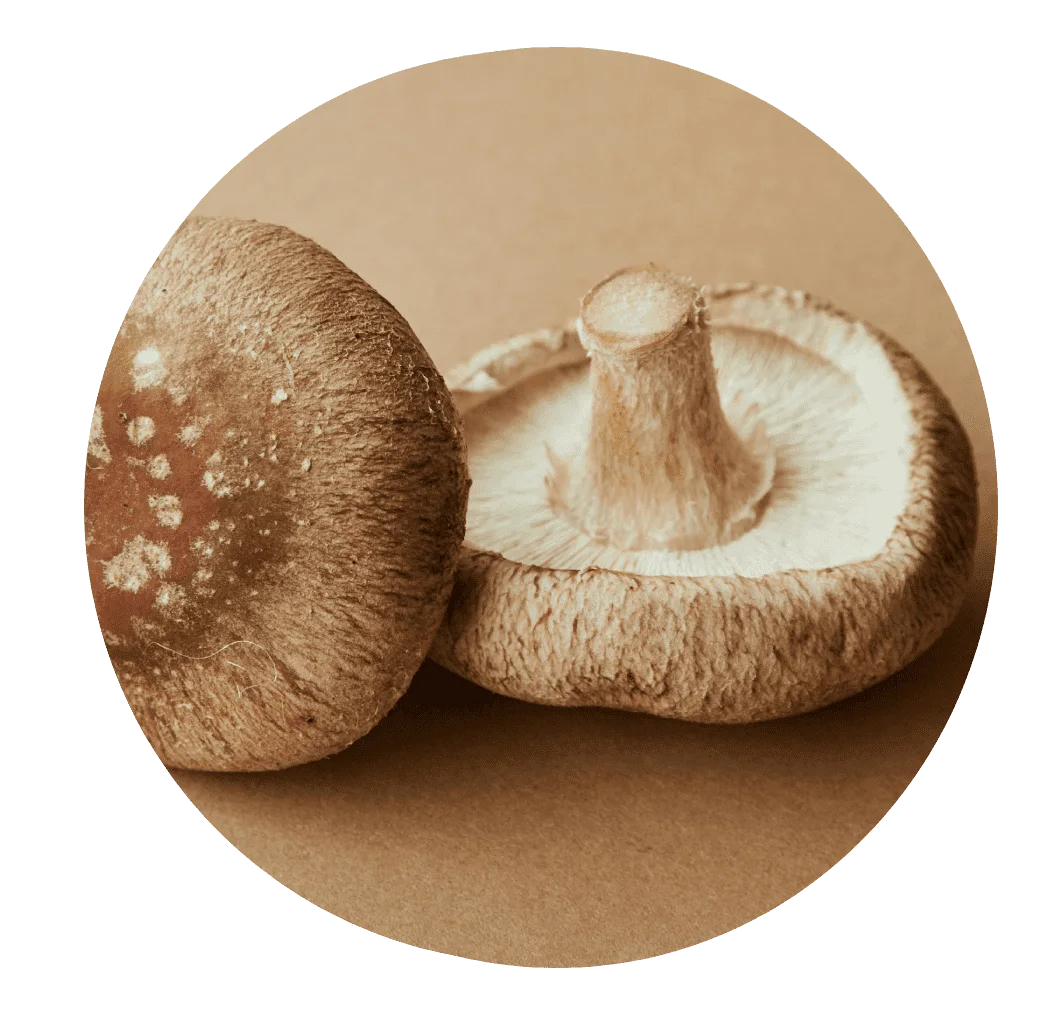
Shiitake is the rare functional mushroom you probably already have in your kitchen. Long before it appeared in supplement blends, it was — and still is — one of the most popular edible mushrooms in the world, prized in East Asian cooking for its rich, savoury, umami depth. But behind that culinary fame sits a genuinely interesting wellness story. This guide explains, in plain English, what the real shiitake mushroom benefits are, the science behind the compound lentinan, how shiitake fits into a modern cognitive-wellness blend, and how to tell a serious shiitake product from a marketing gimmick on the shelf.
Shiitake (Lentinula edodes) is an edible mushroom native to East Asia, where it has been cultivated on logs for centuries and used in both food and traditional practice. Its name comes from the Japanese words for the shii tree it grows on and take, meaning mushroom. In traditional systems of wellness it has long been valued as a “tonic” food — something eaten regularly to support overall vitality rather than taken as a short, sharp remedy.
In the modern functional-mushroom category, shiitake usually plays a foundational role. It is not the flashy focus ingredient — that title tends to go to lion’s mane in a blend like Mindoxa — but it is one of the workhorses that gives a formula its depth, contributing beta-glucans, minerals and antioxidants that support the whole picture of everyday wellness.
In traditional and general use, shiitake is associated with a handful of overlapping areas of everyday support:
It is worth being clear about what is not on that list. Shiitake is a food and a supplement, not a treatment for any medical condition. The honest framing is that it offers gentle, daily nutritional and wellness support — most useful as part of a varied diet and a sensible routine, not as a standalone fix.
If shiitake has a headline compound, it is lentinan. Lentinan is a specific beta-glucan — a 1,3-beta-glucan, to be precise — isolated from the shiitake fruiting body. It is one of the most extensively studied mushroom polysaccharides in the world, and it is a large part of why shiitake earned its long-standing place in traditional wellness.
Beta-glucans are the fibre-like compounds that sit at the centre of nearly every functional mushroom’s story. They are what your immune system’s cells appear to “recognise,” and they are the reason the beta-glucan percentage on a label is one of the single most useful numbers you can check. If you want the full mechanism, we wrote a dedicated explainer on what beta-glucans in functional mushrooms actually are — it is the best companion read to this article.
One practical consequence of lentinan being a beta-glucan: it is water-soluble. That means a proper hot-water extraction is important to free it from shiitake’s tough, chitin-rich cell walls and make it accessible. Raw, unextracted shiitake powder is a much more dilute way to get it.
Lentinan gets the headlines, but shiitake is a more interesting mushroom than any single compound suggests. Two others are worth knowing by name:
Eritadenine is a compound found relatively specifically in shiitake, and it is one researchers have long found interesting in the context of fat and cholesterol metabolism. The science here is ongoing and much of it is early, so the responsible framing is simply that eritadenine is a compound of scientific interest — not a reason to expect any specific health outcome.
Shiitake is also one of the best dietary sources of ergothioneine, an unusual antioxidant amino acid that the body actively transports into its cells. Ergothioneine is interesting enough that we gave it its own guide — if you want the deeper story, read our beta-glucan explainer first and then explore how antioxidants like ergothioneine round out a mushroom’s nutritional profile. Together, these compounds are why shiitake is far more than a flavour ingredient.
Here is an honest question a smart shopper asks: if shiitake is not a classic focus mushroom, why is it in a cognitive-wellness blend at all? The answer is that a good formula is not just a stack of headline ingredients — it is a balanced whole. Shiitake plays the supporting role that lets the stars shine:
This is the same logic behind pairing it with mushrooms like maitake and its D-fraction and turkey tail: each mushroom covers a slightly different base, and together they build a rounder, more resilient formula than any single mushroom could on its own.
Mindoxa combines shiitake with lion’s mane, cordyceps, reishi and two more mushrooms in a once-daily capsule — no chopping, no soaking, backed by a 60-day guarantee.
See Mindoxa Packages
Shiitake is unusual among functional mushrooms in that most people already eat it. Adding cooked shiitake to your meals is a perfectly good, food-first way to enjoy it. For a more consistent, concentrated dose, a supplement extract is the practical route. A few sensible pointers:
If you are pregnant, nursing, under 18 or taking medication, talk to your physician before starting any new supplement. See how Mindoxa combines shiitake with five other mushrooms if you would rather get it in a once-daily capsule than manage separate jars.
Because lentinan is water-soluble and lives in the fruiting body, the details on a shiitake label genuinely change what you are buying. Look for:
Lentinan is the best-characterised single compound in shiitake: a purified beta-1,3-glucan with beta-1,6 branches that has been used as an injectable adjuvant in Japan for decades. That regulatory history is often quoted as if it applied to a capsule, and it does not — an injected purified polysaccharide and an oral mushroom powder are different exposures entirely.
The oral picture is more modest. Animal work such as a 2023 study in the Iranian Journal of Basic Medical Sciences has examined lentinan and shiitake beta-glucan extracts on immune and haematological measures, and a 2025 review in Chemistry & Biodiversity surveys the wider nutritional and medicinal profile of the species, including eritadenine and its ergothioneine content.
A useful corrective comes from a 2024 paper in the Journal of Fungi on medicinal mushrooms as multicomponent mixtures, which argues that a mushroom is a multicomponent mixture and that isolating one molecule misrepresents what a whole-mushroom preparation delivers. In practical terms: buy shiitake for its overall beta-glucan content, not because a label mentions lentinan. If you would rather drink your mushrooms, we compare that against capsules in mushroom coffee vs capsules.
Shiitake proves that a mushroom can be both dinner and a serious functional ingredient. Its reputation rests on real substance — the well-studied beta-glucan lentinan, the intriguing compound eritadenine, and one of the best dietary supplies of the antioxidant ergothioneine. It is best understood as a foundational mushroom: gentle, whole-body nutritional and wellness support that rounds out a routine rather than acting as a single-shot solution. In a cognitive-wellness formula it plays the quiet supporting role that lets focus-forward mushrooms do their job. If you would rather not manage a shelf of single-mushroom jars, a thoughtfully combined blend like Mindoxa puts shiitake alongside five complementary mushrooms in one daily capsule.
Shiitake (Lentinula edodes) is traditionally associated with immune and everyday wellness support, thanks largely to its beta-glucans, including the well-known compound lentinan. It is also a natural food source of nutrients such as copper, selenium, B vitamins and the antioxidant ergothioneine. It is best thought of as gentle daily nutritional support rather than a fast-acting remedy.
Lentinan is a specific beta-glucan (a 1,3-beta-glucan) isolated from shiitake mushrooms. It is one of the most studied mushroom polysaccharides and is a large part of why shiitake has such a long-standing reputation in traditional wellness. Like other beta-glucans, it is water-soluble and best delivered through a proper hot-water extract.
Shiitake is usually grouped as a functional and culinary mushroom rather than a classic focus-first nootropic like lion’s mane. In a cognitive-wellness blend it plays a supporting, foundational role: it contributes beta-glucans, minerals and antioxidants that round out the formula rather than acting as the headline focus ingredient.
Shiitake is a widely eaten culinary mushroom and is generally well tolerated as food. Some people are sensitive to raw or undercooked shiitake, so cooking it thoroughly is sensible. As with any supplement, follow the label directions, and speak to your physician if you are pregnant, nursing, under 18 or taking medication.
Look for the Latin name Lentinula edodes, whether the fruiting body or mycelium is used, an extract rather than raw powder, and ideally a stated beta-glucan percentage. Because lentinan is water-soluble, a proper hot-water extraction matters. Vague terms like “mushroom complex” with no species or extraction detail are a red flag.
Shiitake, like other mushrooms, can produce vitamin D2 when exposed to ultraviolet light, so UV-treated shiitake can be a modest dietary source. The amount varies a great deal depending on how the mushroom was grown and processed, so it should not be relied upon as your sole source of vitamin D.
The Mindoxa Research Team is a small group of nutrition writers, label analysts and wellness researchers who read the primary literature on functional mushrooms so you don't have to. We translate dense mycology and supplement-science papers into plain-English guides, and we update our articles as the evidence and the labels on the shelf change.
Everything we publish is independently written and fact-checked. We describe traditional and general use only — we do not give medical advice, and we always point you back to your own physician for anything specific to your health. Have a correction or a source we missed? Get in touch.
† These statements have not been evaluated by the FDA. This product is not intended to diagnose, treat, cure or prevent any disease. This article is for general information only and is not medical advice.