
| What they are | Beta-glucans are natural fibre-like polysaccharides (long sugar chains) found in the cell walls of mushrooms — widely considered the key active compounds behind the category. |
| How they work | As a soluble fibre, beta-glucans interact with the gut and are studied for their traditional role in supporting immune balance and overall wellness. |
| Why they matter | The beta-glucan percentage is one of the best single indicators of a mushroom extract’s quality — and the number a serious brand is willing to state. |
| Watch out for | ‘Polysaccharides’ on a label can include starch from grain the mycelium was grown on — not the same as true beta-glucans. |
Read enough functional-mushroom labels and one word keeps surfacing: beta-glucans. Brands print the percentage in bold, reviewers obsess over it, and premium products charge more because of it. But almost no one stops to explain what beta-glucans actually are or why they deserve the attention. So let’s fix that. This is a plain-English answer to what are beta-glucans in functional mushrooms, how they work, and — most usefully — how to use that one number to tell a serious mushroom product from an expensive bag of filler.
Beta-glucans are polysaccharides — a fancy word for long chains of glucose (sugar) molecules linked together. But do not let the word “sugar” mislead you: these are not the kind of sugar that spikes your blood glucose. Because of the specific way the molecules are bonded, your body cannot digest them like ordinary carbohydrate. Instead they behave like a soluble dietary fibre, passing into the gut largely intact.
In mushrooms, beta-glucans are structural. They make up a large part of the fungal cell wall — essentially the scaffolding that gives a mushroom its shape and toughness. That is a crucial detail, because it explains why raw mushroom is hard to get value from and why extraction matters (more on that below). Beta-glucans are widely considered the key active compounds behind the whole functional-mushroom category, from lion’s mane to reishi to cordyceps.
The interesting thing about beta-glucans is that their benefits are tied to their shape, not just their presence. Mushroom beta-glucans have what chemists call a 1,3/1,6 branching structure — a backbone with side branches — and that particular architecture is what most functional-mushroom research focuses on. In traditional and general use, beta-glucans are associated with:
As always, it is honest to say that the human research is still developing and that these are descriptions of traditional and general use, not medical claims. Beta-glucans are a foundation of the category’s reputation, not a proven treatment for any condition.
You may have seen beta-glucans mentioned on oat cereal boxes too — and yes, they are related, but they are not the same thing. Oat and barley beta-glucans have a 1,3/1,4 structure and are best known for supporting heart health and healthy cholesterol. Mushroom beta-glucans have the 1,3/1,6 structure described above, which is the form tied to the immune and wellness research behind functional mushrooms. Both are good soluble fibres; they simply do different jobs and are not interchangeable.
Here is the practical payoff. Because beta-glucans are the active fraction, the beta-glucan percentage on a label is one of the best single indicators of an extract’s quality. A brand that prints, say, “standardised to 30% beta-glucans” is being transparent about exactly how much active material you are paying for. A brand that stays silent is asking you to take potency on faith.
There is a well-known trap to avoid here, and it hinges on one word: “polysaccharides.” Remember that all beta-glucans are polysaccharides, but not all polysaccharides are beta-glucans. Some products report an impressively high “polysaccharide” number — 40, 50, even 60 percent — that quietly includes alpha-glucans such as starch. Where does that starch come from? Often from the grain the mycelium was grown on, which can end up in the finished powder. A high polysaccharide figure can therefore be measuring leftover rice or oat starch rather than genuine mushroom actives.
| “30% beta-glucans” | A specific, stricter measure of true mushroom actives. This is what you want to see. |
| “50% polysaccharides” | Broader and looser — may include alpha-glucans (starch) from the grain a mycelium was grown on. |
| No figure at all | You are trusting the brand on potency with nothing to verify it against. |
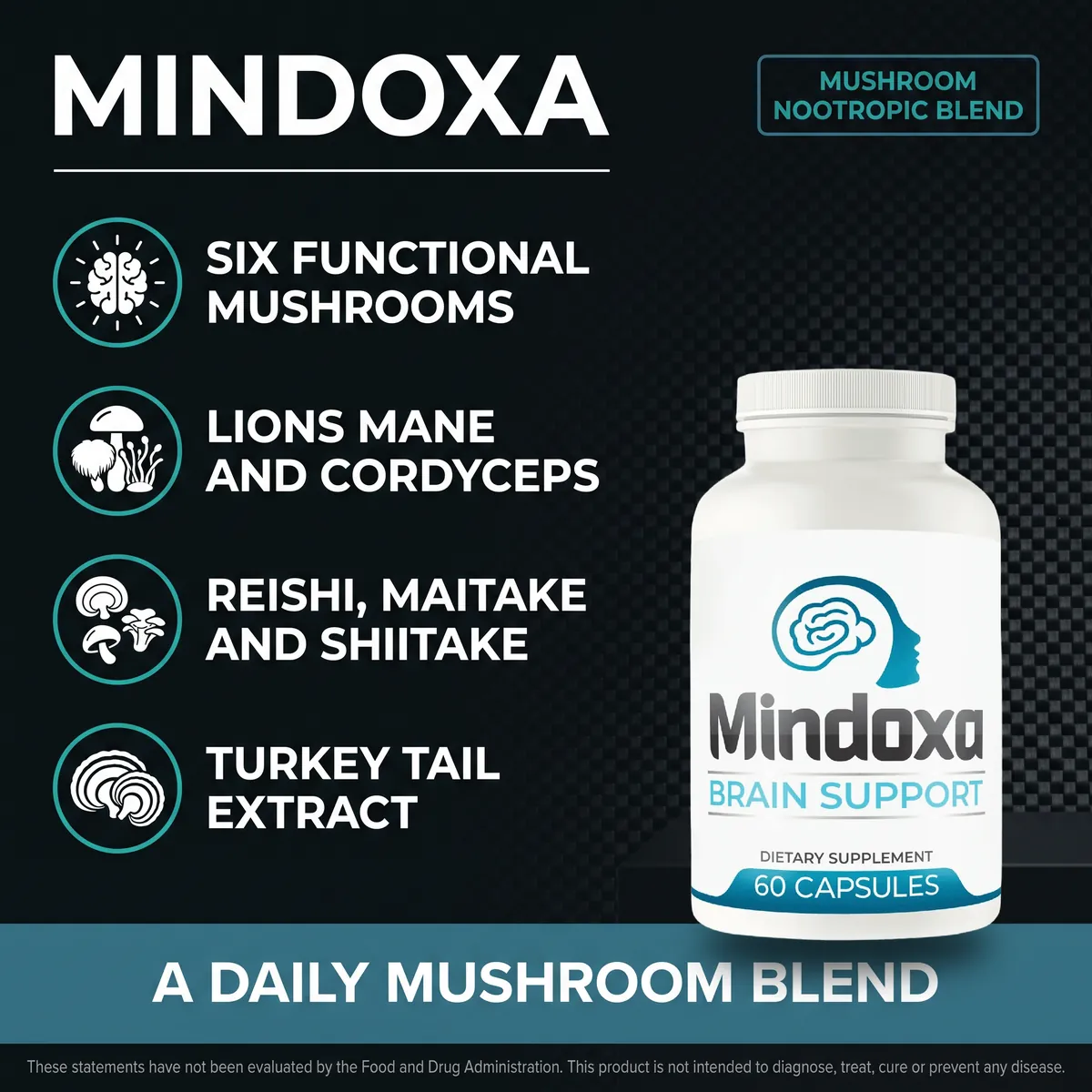
Mindoxa combines six functional mushrooms — lion’s mane, cordyceps, reishi, shiitake, maitake and turkey tail — in one daily capsule, so you get a broad spread of mushroom beta-glucans without juggling jars. Backed by a 60-day guarantee.
See Mindoxa Packages
Because beta-glucans are locked inside tough fungal cell walls made of chitin, your body struggles to access them from raw, unprocessed mushroom. That is why extraction is not a luxury but a necessity for most functional mushrooms:
This is also why the part of the mushroom used is such a live debate: fruiting bodies and mycelium differ in both beta-glucan content and in how much stray starch they carry. We unpack that fully in fruiting body vs mycelium mushroom supplements.
Beta-glucans are the reason a mushroom supplement is worth measuring at all, and the research is clear about one thing above others: structure decides behaviour. A 2025 paper in Food Chemistry on the structure-function relationship of mushroom beta-glucans explains that branching pattern, chain length and solubility change how the molecule is recognised, which is why two products with the same beta-glucan percentage are not necessarily equivalent.
On what they do, a 2021 review in Nutrients on edible mushrooms and beta-glucans in human health treats them primarily as fermentable dietary fibres with plausible immune interactions, and a 2020 review in the Journal of Fungi on beta-glucan metabolic and immunomodulatory properties surveys the clinical work and finds it early-stage. A broader 2020 review of fungal polysaccharides in Advances in Pharmacology adds the extraction context: because beta-glucans are water-soluble, hot-water extraction is what concentrates them.
Two practical consequences follow. First, a stated beta-glucan percentage is the single most informative number on a mushroom label. Second, a high percentage says nothing about safety or suitability — for that, read our guide to functional mushroom side effects and safety.
Beta-glucans are the reason functional mushrooms are “functional” in the first place — soluble-fibre polysaccharides in the mushroom’s cell wall, with a distinctive 1,3/1,6 structure tied to the category’s traditional immune and wellness reputation. The single most useful habit you can build as a shopper is to look for a stated beta-glucan percentage rather than a vague polysaccharide number, and to prefer extracts over raw powder. Do that, and you cut through most of the marketing noise in one move. If you would rather let a formulator do the sourcing, a broad six-mushroom blend like Mindoxa is built around exactly this logic. For the wider context on clearing mental fog, see how to fix brain fog with functional mushrooms.
Beta-glucans are naturally occurring polysaccharides — long chains of glucose sugar molecules — that make up much of the cell wall of mushrooms. They are widely regarded as the key active compounds behind functional mushrooms such as lion’s mane, reishi, cordyceps and turkey tail, and they behave in the body like a soluble dietary fibre.
The beta-glucan percentage tells you how much genuine active material an extract contains, which is one of the best single indicators of quality. A product that states, for example, a 25 to 40 percent beta-glucan content is being transparent about its potency; a product that hides behind a vague ‘polysaccharide’ figure may be counting starch rather than true beta-glucans.
All beta-glucans are polysaccharides, but not all polysaccharides are beta-glucans. Some labels report a high ‘polysaccharide’ number that includes alpha-glucans such as starch — often left over from the grain a mycelium was grown on. A true beta-glucan figure is a stricter, more meaningful measure of an extract’s active content.
Beta-glucans are found across functional mushrooms, with turkey tail, reishi, maitake, shiitake and cordyceps all recognised sources. The exact content depends heavily on the species, the part of the mushroom used and how it was extracted, which is why a stated percentage matters more than the mushroom’s name alone.
They are related but structurally different. Oat and barley beta-glucans have a 1,3/1,4 structure best known for heart and cholesterol support, while mushroom beta-glucans have a 1,3/1,6 structure that is the focus of most functional-mushroom research. Both are beneficial soluble fibres, but they are not interchangeable.
Extraction — typically with hot water, sometimes combined with alcohol — helps break down the tough fungal cell walls and concentrate the beta-glucans into a form the body can use. This is why concentrated extracts generally provide more usable beta-glucans than raw, unextracted mushroom powder.
The Mindoxa Research Team is a small group of nutrition writers, label analysts and wellness researchers who read the primary literature on functional mushrooms so you don't have to. We translate dense mycology and supplement-science papers into plain-English guides, and we update our articles as the evidence and the labels on the shelf change.
Everything we publish is independently written and fact-checked. We describe traditional and general use only — we do not give medical advice, and we always point you back to your own physician for anything specific to your health. Have a correction or a source we missed? Get in touch.
† These statements have not been evaluated by the FDA. This product is not intended to diagnose, treat, cure or prevent any disease. This article is for general information only and is not medical advice.