
| The goal | Learn to read a mushroom supplement label so you know exactly what is in every capsule — not just what the front of the bottle claims. |
| The five checks | Species name → fruiting body vs mycelium → extract & ratio → beta-glucan percentage → fillers and testing. |
| The key number | A stated beta-glucan percentage tells you more than any ‘polysaccharide’ figure, which can secretly include grain starch. |
| Biggest red flag | No Latin species name, or everything hidden inside a ‘proprietary blend’ with no per-mushroom amounts. |
The front of a mushroom supplement bottle is marketing. The back is where the truth lives. Two products can carry the same glossy claims and beautiful mushroom photography and yet contain wildly different amounts of the compounds that actually matter. This guide teaches you how to read a mushroom supplement label line by line, so you can walk into any shop or scroll any product page and judge quality for yourself in about sixty seconds.
Functional mushrooms are unusually easy to dilute without technically lying. A capsule can legally contain the right species and still deliver very little of the active compounds, simply because of how it was grown and processed. That is why learning to read a mushroom supplement label is not fussiness — it is the difference between paying for concentrated mushroom and paying for filler. The good news is that every meaningful clue lives in five places, and once you know where to look, the pattern repeats on every bottle.
Start with the ingredient line and look for a Latin binomial — two italicised words such as Hericium erinaceus (lion’s mane), Ganoderma lucidum (reishi) or Cordyceps militaris. The common name alone is not enough, because “mushroom” and “cordyceps” cover many species with different profiles.
If a brand will not tell you the species, it is telling you something. A named species is the entry ticket; without it, nothing else on the label can be verified.
This is the single detail most likely to change what you are actually buying. The fruiting body is the mushroom you would recognise on a plate. The mycelium is the thread-like root network, and in most supplements it is grown on grain and then harvested together with that grain.
Neither is automatically wrong, but they are not equivalent. A fruiting-body extract concentrates mushroom actives; a “mycelium on grain” (sometimes labelled mycelised grain or myceliated brown rice) product can be a large fraction of leftover starch. We break down the trade-offs in full in fruiting body vs mycelium mushroom supplements. On the label, the words to hunt for are “fruiting body” — and the phrase to be sceptical of is “mycelial biomass” with no beta-glucan number attached.
Next, work out whether you are buying an extract or plain ground powder. An extract has been processed — usually with hot water, sometimes with alcohol too — to concentrate the active compounds; raw powder is simply the dried mushroom milled fine, and is far more dilute.
You will often see a ratio such as 8:1 or 10:1. That means eight or ten parts of raw mushroom were concentrated into one part of finished extract. It is a useful signal of concentration, but on its own it does not guarantee potency, and it is easy to misread — we explain exactly what those numbers do and do not promise in what a 10:1 mushroom extract ratio means. For mushrooms like reishi and chaga, also look for a note about dual extraction, which uses both water and alcohol to capture two different families of actives.
If you remember only one thing from this guide, make it this. Beta-glucans are the fibre-like polysaccharides behind much of the functional-mushroom category’s traditional reputation, and a stated beta-glucan percentage is the clearest single measure of how active a product really is. A confident brand will print something like “standardised to 30% beta-glucans.”
Here is the trap: many labels instead quote a big “polysaccharides” number — say “50% polysaccharides.” That sounds impressive, but the polysaccharide figure can include alpha-glucans, which is largely starch from the grain the mycelium was grown on. A high polysaccharide number with no separate beta-glucan figure can mean you are paying for rice flour. Our full explainer, what are beta-glucans in functional mushrooms, walks through why this distinction matters so much.
| Beta-glucan % | The compounds you actually want. A stated number is a sign of confidence and testing. |
| “Polysaccharide” % | A broader bucket that can include starch from grain. Impressive-looking but easy to inflate. |
| Rule of thumb | Trust the beta-glucan number; treat a lone polysaccharide number with healthy suspicion. |
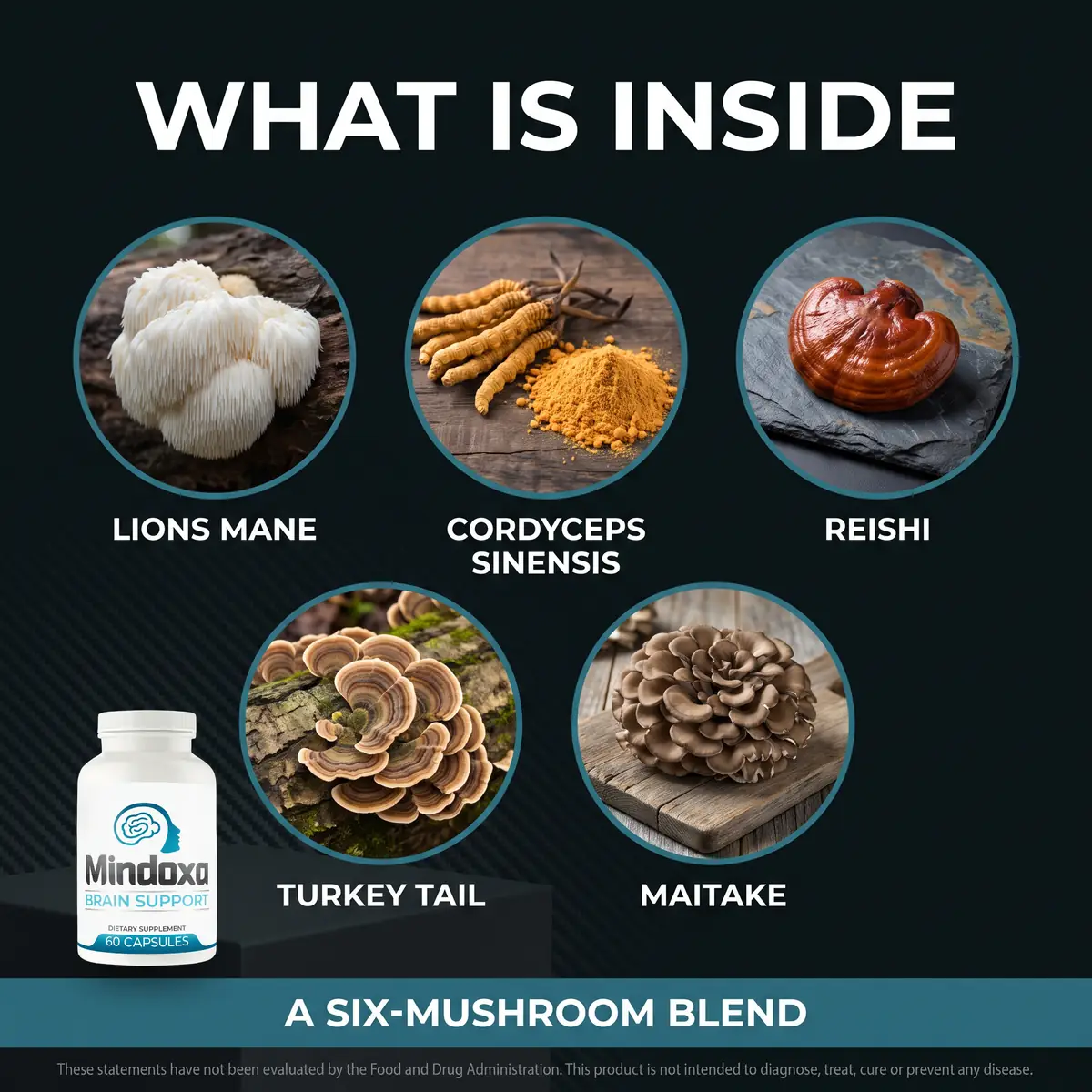
Mindoxa combines six functional mushrooms in a once-daily capsule with a clearly stated blend and a 60-day money-back guarantee — so you can put these checks to work in seconds.
See Mindoxa Packages
Finally, drop down to the Other Ingredients line and the fine print. This is where quality quietly shows itself:
Once it becomes habit, the whole check takes under a minute. Read the label in this order and stop at the first serious red flag:
A product that answers all five cleanly has nothing to hide. If you want to see how this looks across a whole formula rather than a single mushroom, our overview of the six mushrooms in Mindoxa lays each one out, and our guide on using functional mushrooms for brain fog shows how the label details translate into everyday use. You can also compare the Mindoxa packages here.
Reading a label carefully sounds like fussiness until you see how often the label and the contents disagree. A 2024 review in Critical Reviews in Food Science and Nutrition on label compliance for ingredient verification sets out the regulatory background and the analytical methods used to check botanical supplements in the United States, and the picture it paints is of a category where verification is the exception rather than the rule.
The mushroom-specific evidence points the same way. A 2025 comparative study of chaga dietary supplements in the International Journal of Molecular Sciences applied several analytical techniques to products on sale and found wide variation between supplements described in near-identical terms — different actives, different concentrations, same marketing language.
That is why the beta-glucan percentage matters more than any other number on the panel: a 2021 review in Nutrients on edible mushrooms and beta-glucans identifies beta-glucans as the compound class the category is built on, and a 2024 paper on medicinal mushrooms as multicomponent mixtures argues that a whole-mushroom preparation should be judged on its overall composition rather than on one named molecule. A label that names the species, states the part used and prints a beta-glucan percentage has told you almost everything a label can. One that does none of those has told you something too. And once you have chosen, read functional mushroom side effects and safety before your first capsule.
Learning to read a mushroom supplement label turns a confusing shelf into a simple checklist. Named species, fruiting body over mycelium-on-grain, a real extract with a sensible ratio, a stated beta-glucan percentage rather than a vague polysaccharide number, and evidence of testing — those five checks separate a concentrated product from an expensive jar of starch. The front of the bottle is written to sell you; the back is written to inform you. Learn to read the back, and you never have to take a claim on faith again.
Work through five things in order: the Latin species name, whether it uses the fruiting body or mycelium, whether it is an extract and at what ratio, the stated beta-glucan percentage, and the other-ingredients line for fillers. A label that answers all five clearly is a good sign; one that hides them behind a ‘proprietary blend’ is not.
Beta-glucans are the fibre-like compounds behind much of a functional mushroom’s traditional reputation, so a stated beta-glucan percentage is the clearest single measure of how active a product is. Beware labels that quote a high ‘polysaccharide’ number instead, because that figure can include starch from grain growing medium.
The fruiting body is the mushroom itself, while mycelium is usually grown on grain and harvested together with that grain. A fruiting-body extract tends to be more concentrated in mushroom actives, whereas ‘mycelium on grain’ products can contain a large amount of starch that dilutes the beta-glucan content.
A proprietary blend lists several ingredients under one combined weight without telling you how much of each is present. It is not automatically bad, but it hides whether a headline mushroom is a meaningful dose or a pinch of pixie dust. Prefer labels that break out each mushroom’s amount.
A 10:1 ratio means ten parts of raw mushroom were concentrated into one part of finished extract. It signals concentration but not necessarily potency, because it does not guarantee a specific beta-glucan level. Read the ratio alongside the beta-glucan percentage rather than on its own.
Warning signs include no Latin species name, no mention of fruiting body or mycelium, a ‘polysaccharide’ figure with no beta-glucan number, everything hidden in a proprietary blend, and no note of third-party testing or a GMP facility. Any one of these means you cannot fully verify what you are buying.
The Mindoxa Research Team is a small group of nutrition writers, label analysts and wellness researchers who read the primary literature on functional mushrooms so you don't have to. We translate dense mycology and supplement-science papers into plain-English guides, and we update our articles as the evidence and the labels on the shelf change.
Everything we publish is independently written and fact-checked. We describe traditional and general use only — we do not give medical advice, and we always point you back to your own physician for anything specific to your health. Have a correction or a source we missed? Get in touch.
† These statements have not been evaluated by the FDA. This product is not intended to diagnose, treat, cure or prevent any disease. This article is for general information only and is not medical advice.