
| What it is | Reishi (Ganoderma lucidum) is a woody functional mushroom traditionally called the ‘mushroom of calm’ and used to help balance stress and support restful evenings. |
| How it works | It is an adaptogen studied for its triterpenes (the bitter compounds) and beta-glucans, and for its traditional role in supporting the body’s stress response. |
| Sensible dose | Extract products commonly supply about 1,000–2,000 mg per day; often taken in the evening as part of a wind-down routine. |
| On the label | Look for a fruiting-body extract, a stated triterpene or beta-glucan figure, and the species Ganoderma lucidum. |
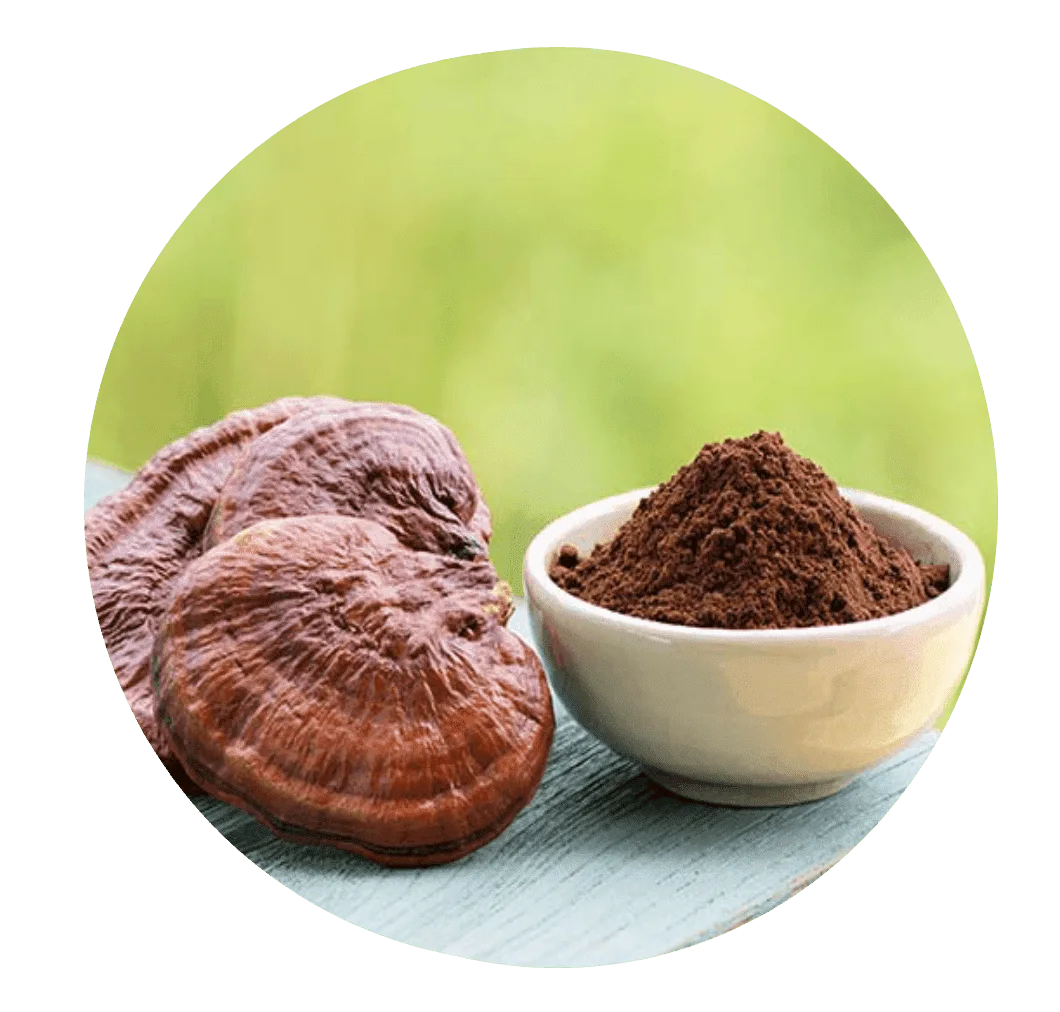
If lion’s mane covers focus and cordyceps covers energy, reishi covers the third piece almost everyone forgets: calm. There is little point in sharpening focus and boosting energy if you are too wound up to think clearly or too restless to sleep well. This guide explains the real reishi mushroom benefits for stress and sleep, how this classic adaptogen is thought to work, and how to choose a reishi product that is worth the money.
Reishi (Ganoderma lucidum) is a hard, woody, fan-shaped mushroom that has been used in East Asian traditional practice for more than two thousand years — long enough to earn poetic nicknames like the “mushroom of immortality” and, more usefully for our purposes, the “mushroom of calm.” Unlike a culinary mushroom you would fry up for dinner, reishi is far too tough and bitter to eat whole, which is exactly why it is almost always taken as an extract. It anchors the calming corner of the Mindoxa blend.
Reishi is one of the most classic adaptogens — a term for natural substances traditionally used to help the body cope with and adapt to stress, nudging it back toward balance rather than pushing hard in one direction. The compounds researchers focus on are:
The key nuance — and it matters for setting expectations — is that reishi is not a sedative. It does not work like a sleeping pill and will not knock you out. Its traditional role is to support a calmer baseline and a smoother wind-down, which many people find naturally makes restful evenings easier. As with the whole category, the human evidence is still developing, so the honest language is “traditionally used to support calm,” not any medical claim about treating stress or a sleep disorder.
In traditional and everyday use, people reach for reishi to support:
Why does a calm mushroom belong in a focus supplement? Because stress and poor sleep are two of the biggest drivers of brain fog — a point we make in detail in how to fix brain fog with functional mushrooms. Supporting calm is not a distraction from cognition; it is part of the foundation.

As always, the form dictates the number:
Follow the directions on your specific product label, and check with your physician first if you are pregnant, nursing, under 18 or taking medication — particularly blood-thinning medication, which is a common general caution with reishi.
Because reishi rewards consistency rather than a big one-off dose, the practical trick is to anchor it to a habit you already have so you never forget it. A few simple principles help:
One reason a blend can be easier to stick with than a shelf of single jars is that a single capsule folds reishi into the same daily habit as your focus and energy mushrooms — no separate evening ritual to remember. That everyday practicality, not just the ingredient list, is a big part of why people stay consistent long enough to notice how a routine fits them.
Mindoxa brings reishi together with lion’s mane, cordyceps and three more functional mushrooms so calm supports focus instead of fighting it. Once daily, backed by a 60-day guarantee.
See Mindoxa Packages
This is the question people actually type into a search box, so it deserves a straight answer: reishi is not a sedative, and no human trial has shown it to work like one. What exists is a mixture of one small human study and a body of animal work.
The human study is a 2005 randomized, double-blind, placebo-controlled study in the Journal of Medicinal Food, in which participants taking a Ganoderma lucidum polysaccharide extract for eight weeks reported less fatigue and irritability than those on placebo. That is a wellbeing measure, not a sleep measure.
The sleep research is all preclinical. Rodent studies have reported that a Ganoderma lucidum extract prolonged sleep time in rats and that an extract potentiated pentobarbital-induced sleep through a GABAergic mechanism. A 2021 paper in Scientific Reports went further and described a gut-microbiota-dependent, serotonin-involved pathway in mice — the source of the “reishi and serotonin” claim that circulates online, and a finding in mice, not people.
So the honest position is: reishi is traditionally used for calm, the animal data are genuinely interesting, and none of it establishes a sedative effect in humans. Most people take a reishi-containing blend in the morning without drowsiness. If you would rather take your mushrooms as a hot drink than a capsule, our comparison of mushroom coffee against capsules covers what changes and what does not.
Reishi is the quiet, steadying member of the functional-mushroom family — an ancient adaptogen traditionally used to support calm, stress balance and restful evenings through its triterpenes and beta-glucans. It is not a sedative, and it works best taken consistently over weeks as part of a genuine wind-down routine. Choose a dual-extracted fruiting-body product with a stated triterpene or beta-glucan figure, and remember that calm is not the opposite of focus — it is the foundation of it. If you would like reishi working alongside a focus mushroom and an energy mushroom in one daily serving, that balance is the whole idea behind Mindoxa. Round out your knowledge with our guides to lion’s mane for memory and focus and cordyceps for energy and focus.
Reishi is traditionally used to support a calm baseline, help balance the body’s stress response and encourage restful evenings. It is not a sedative and does not knock you out; it is better understood as gentle, adaptogenic support for winding down as part of a consistent routine.
Reishi is not a sedative and does not force drowsiness the way a sleeping pill would. Its traditional reputation is for promoting calm and a settled state that many people find helpful in the evening, rather than causing sudden sleepiness during the day.
Because it is associated with calm and winding down, many people take reishi in the late afternoon or evening as part of a wind-down routine. That said, it is not a stimulant, so it can be taken earlier in the day too — consistency matters more than exact timing.
An adaptogen is a natural substance traditionally used to help the body cope with and adapt to stress, nudging it toward balance rather than pushing in one direction. Reishi is one of the most classic adaptogenic mushrooms, which is why it is associated with stress balance and calm.
Extract-based products commonly supply somewhere around 1,000 to 2,000 mg per day, though this depends on the concentration of the specific extract. Follow the directions on your product label and start at the lower end if you are new to it.
Yes — these three are a classic combination. Lion’s mane is associated with focus, cordyceps with steady energy and reishi with calm, so together they aim to support the whole picture of clear, energised but settled cognition. Mindoxa combines all three plus three more mushrooms.
The Mindoxa Research Team is a small group of nutrition writers, label analysts and wellness researchers who read the primary literature on functional mushrooms so you don't have to. We translate dense mycology and supplement-science papers into plain-English guides, and we update our articles as the evidence and the labels on the shelf change.
Everything we publish is independently written and fact-checked. We describe traditional and general use only — we do not give medical advice, and we always point you back to your own physician for anything specific to your health. Have a correction or a source we missed? Get in touch.
† These statements have not been evaluated by the FDA. This product is not intended to diagnose, treat, cure or prevent any disease. This article is for general information only and is not medical advice.