
| What it is | Lion’s Mane (Hericium erinaceus) is an edible functional mushroom traditionally used to support focus, mental clarity and everyday recall. |
| How it works | It contains hericenones (in the fruiting body) and erinacines (in the mycelium) — compounds studied for their relationship with nerve growth factor (NGF). |
| Sensible dose | Most extract-based products supply roughly 500–1,000 mg per day; consistency over several weeks matters more than a single large dose. |
| On the label | Look for a named species, a fruiting-body extract and, ideally, a stated beta-glucan percentage rather than raw ‘mushroom powder’. |
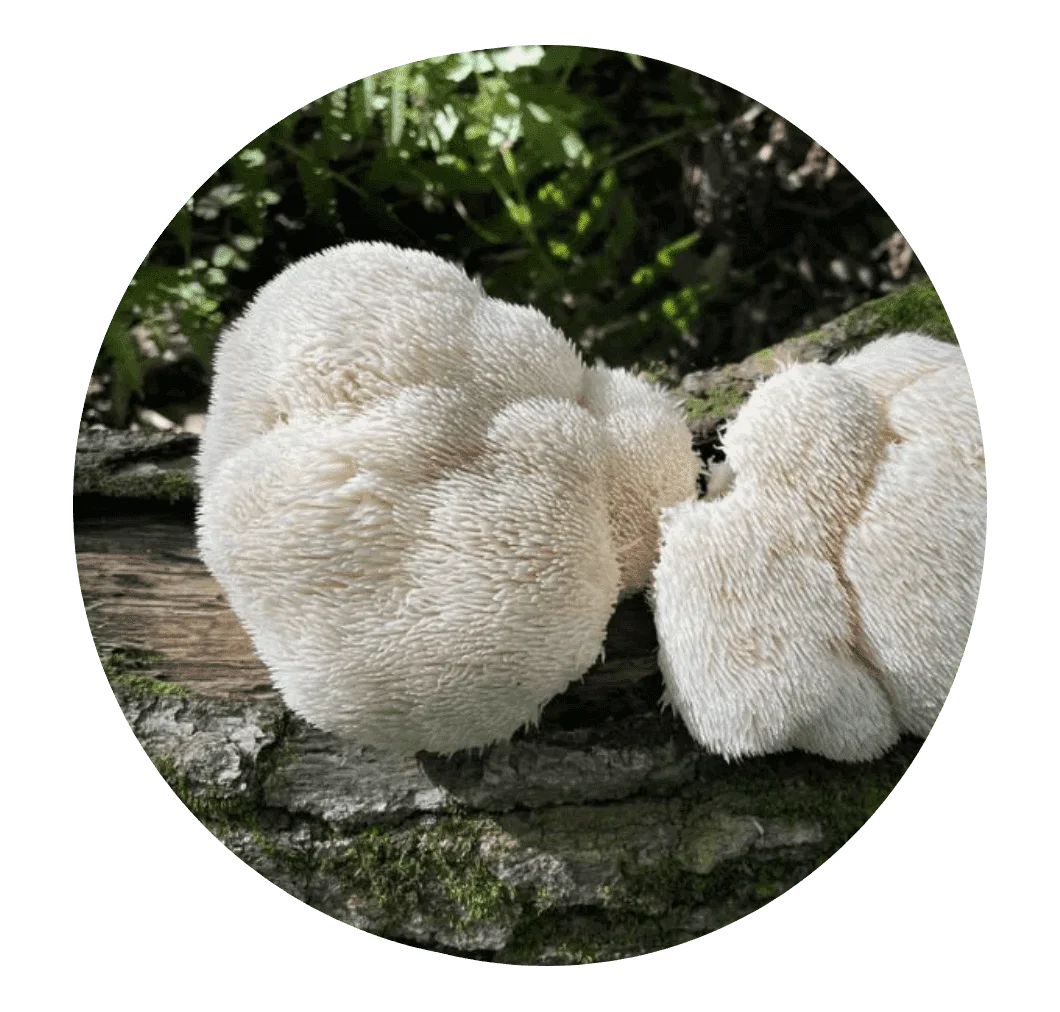
If you have spent any time reading about nootropics, you have almost certainly run into lion’s mane. It is the shaggy, white, pom-pom-shaped mushroom that has become shorthand for “the brain mushroom” — and unlike a lot of wellness hype, its reputation is built on a genuinely interesting mechanism. This guide explains, in plain English, what the lion’s mane benefits for memory and focus actually are, how the mushroom is thought to work, how much people take, and how to tell a serious product from a marketing gimmick on the shelf.
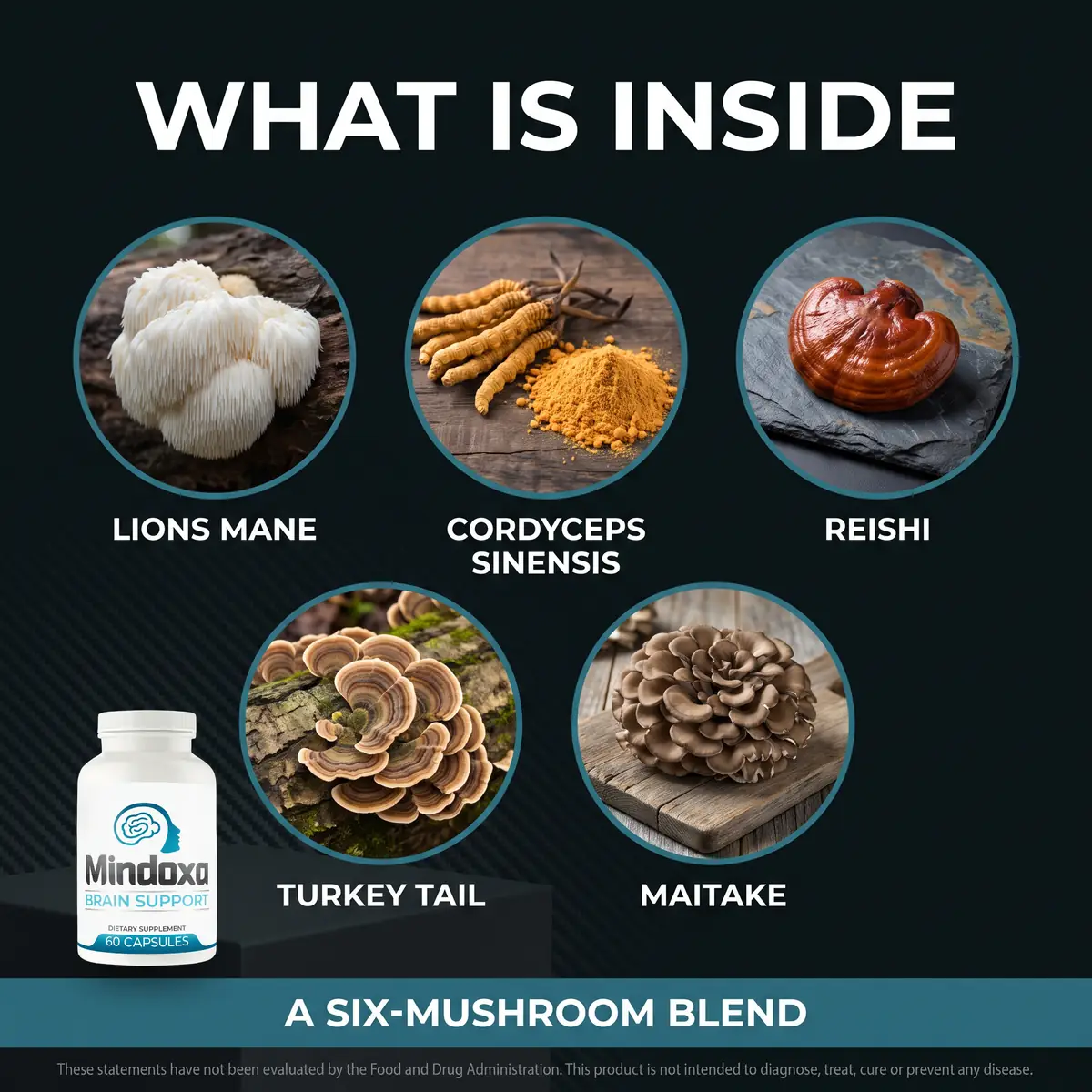
Lion’s Mane (Hericium erinaceus) is an edible mushroom that grows on hardwood trees and has been used in East Asian food and traditional practice for centuries. In the kitchen it is prized for a seafood-like, almost crab-meat texture. In the wellness world it has become the headline nootropic mushroom — the one most closely tied to focus, mental clarity and everyday recall. That reputation is the reason it anchors most cognitive mushroom blends, including the six-mushroom formula in Mindoxa.
It is worth being precise about language here. “Nootropic” simply means a substance used with the goal of supporting cognition. Lion’s mane is a gentle, food-derived nootropic, not a pharmaceutical. It is used to support the everyday experience of a clear head, not to override it.
This is where lion’s mane gets genuinely interesting, and where a little mechanism knowledge helps you shop smarter. The mushroom contains two families of compounds that researchers keep coming back to:
Both groups have been studied for their relationship with nerve growth factor (NGF) — a protein that plays a role in the growth, maintenance and survival of nerve cells. The theory that makes lion’s mane so talked-about is that these compounds may support the body’s own NGF activity. It is important to be honest about the state of the evidence: much of this work is early, and a good deal of it has been done in laboratory and animal models rather than large human trials. That is exactly why responsible writing about lion’s mane sticks to the language of traditional and general use and avoids promising specific outcomes.
There is a second, simpler reason lion’s mane belongs in a focus routine: like all functional mushrooms, it is rich in beta-glucans, the fibre-like compounds behind much of the category’s traditional wellness reputation. If you want the deeper story on those, we wrote a whole explainer on what beta-glucans in functional mushrooms actually are.
So what do people actually reach for lion’s mane hoping to support? In traditional and everyday use, the mushroom is associated with:
Notice what is not on that list: lion’s mane is not a cure for any medical condition, and it will not rescue a brain running on three hours of sleep. It is best framed as steady, daily support that works with the fundamentals rather than instead of them. If brain fog is your main concern, our guide on how to fix brain fog with functional mushrooms walks through the lifestyle levers that matter most.
There is no single official dose, because it depends heavily on the form of the product. A concentrated extract is not the same as raw powder, so comparing milligram numbers between products only works if you also know how concentrated each one is. As a general orientation:
The single most useful habit is to follow the directions on your specific product label and to start at the lower end if you are new to functional mushrooms. If you are pregnant, nursing, under 18 or taking medication, talk to your physician before starting any new supplement.
Mindoxa combines lion’s mane with cordyceps, reishi and three more functional mushrooms in a once-daily capsule — no bitter mushroom coffee, backed by a 60-day guarantee.
See Mindoxa Packages
This is where mechanism knowledge pays off at the checkout. Because hericenones live in the fruiting body and erinacines in the mycelium, the part of the mushroom used is not a trivial detail — it changes what compounds you are actually buying. When you read a label, look for:
The mechanism story and the human evidence are two different things, and it is worth keeping them apart. On mechanism, a 2023 review of the neurotrophic and neuroprotective effects of Hericium erinaceus in the International Journal of Molecular Sciences pulls together the laboratory work on hericenones, erinacines and nerve growth factor — interesting, consistent, and almost entirely conducted in cells and animals.
The human picture is smaller. The trial everyone quotes is a 2009 double-blind, placebo-controlled trial in Phytotherapy Research: thirty older Japanese adults with mild cognitive impairment took lion’s mane or placebo for sixteen weeks, and cognitive scores rose in the mushroom group while they were taking it, then fell back after they stopped. More recently, a 2023 pilot study in Nutrients tested both a single dose and a four-week course in healthy young adults and reported faster performance on one speed measure without broad gains across the battery.
Put together, that is a promising but thin evidence base: small samples, short durations and different extracts. A 2025 systematic review in Frontiers in Nutrition on the benefits, side effects and uses of Hericium erinaceus reaches the same conclusion, and also notes that reported side effects were mild and uncommon — a point we cover in more depth in our guide to functional mushroom side effects and safety.
Lion’s Mane earns its place as the flagship nootropic mushroom for a reason: it pairs a long history of traditional use with a genuinely intriguing mechanism involving hericenones, erinacines and nerve growth factor. The honest framing is that it is gentle daily support for focus, clarity and recall — most effective when it sits on top of good sleep, movement and nutrition, and when you choose a well-labelled fruiting-body extract. If you would rather not manage a cupboard of single-mushroom jars, a thoughtfully combined blend like Mindoxa puts lion’s mane alongside five complementary mushrooms in a single daily capsule. Curious how the energy side of that blend works? Read our companion guide on cordyceps benefits for energy and focus.
Lion’s Mane is traditionally used to support everyday focus, mental clarity and word-finding or recall. It is best thought of as gentle daily support for cognition rather than a fast-acting stimulant, and it is most often taken as part of a wider routine that includes good sleep and movement.
Most extract-based supplements supply somewhere between 500 and 1,000 mg per day, though the right amount depends on the concentration of the specific extract. Always follow the directions on your product label, and start at the lower end if you are new to functional mushrooms.
Functional mushrooms are used consistently over time rather than as a one-off. Many people take lion’s mane daily for several weeks before judging how it fits their routine, alongside good sleep, movement and a varied diet.
No. Lion’s Mane is not a stimulant and contains no caffeine. It is used to support clear, steady focus rather than the spike-and-crash pattern that comes with strong coffee or energy drinks.
Look for the Latin name Hericium erinaceus, whether the product uses the fruiting body or mycelium, an extract rather than raw powder, and ideally a stated beta-glucan percentage. Vague terms like ‘mushroom complex’ with no species or extraction detail are a red flag.
Many people do pair the two, using coffee for an immediate lift and lion’s mane for steady daily support. If you are sensitive to caffeine, keep your coffee intake modest so you can tell how the mushroom itself fits your routine.
The Mindoxa Research Team is a small group of nutrition writers, label analysts and wellness researchers who read the primary literature on functional mushrooms so you don't have to. We translate dense mycology and supplement-science papers into plain-English guides, and we update our articles as the evidence and the labels on the shelf change.
Everything we publish is independently written and fact-checked. We describe traditional and general use only — we do not give medical advice, and we always point you back to your own physician for anything specific to your health. Have a correction or a source we missed? Get in touch.
† These statements have not been evaluated by the FDA. This product is not intended to diagnose, treat, cure or prevent any disease. This article is for general information only and is not medical advice.